
Planned Educational Outreach at Bahawal Tea House
Bahawal Tea House is a library cafe inside the Central Library at CMH Chowk, Bahawalpur, and one of its core aims is to encourage educational visits by schools, colleges and universities. This page explains the outreach programme we plan to run, in coordination with the library administration and subject to approval.
The idea is simple: give classes and study groups a welcoming, well organised reason to come to the library, discover books and heritage, and share a sensible meal afterwards. Our vision is to be the cultural living room of Bahawalpur, and students are central to that picture.
What is the educational outreach programme planned for Bahawalpur students?
It is a planned programme of school and university tours that brings groups to the Central Library for a welcome, an orientation, learning activities and an affordable meal at the cafe. Every element is proposed and will go ahead subject to approval and library rules, with dates fixed together with each institution.
Think of it as a school trip with a purpose: students arrive, are welcomed, learn something new about books or their own city, and sit down together afterwards. Teachers keep control of the educational goals, while the cafe team looks after the hospitality.
Who is invited to take part in the programme?
We plan to invite primary and secondary schools, colleges, universities and private academies in and around Bahawalpur. Teachers, principals, department heads, student societies and reading clubs are all welcome to ask about a visit. Smaller study groups and homeschooling families can be considered as well.
Why the Central Library Suits a Student Visit
Few places in the city combine a reading culture, a historic building and a comfortable cafe under one roof. For a class studying literature, history or civics, that combination turns an ordinary outing into a lesson that stays in the memory.
A visit also gives young people a first, friendly encounter with a public library, which is often the step that turns a reluctant reader into a regular one.
Why choose a library visit for an educational tour in Bahawalpur?
A library visit is calm, inexpensive to organise and easy to link with the school syllabus. Students see how a public reading space works, learn to find and handle books, and practise quiet, respectful behaviour in a shared setting. Teachers can attach short tasks, such as choosing a topic to research or writing a few lines about the building.
Because the cafe is part of the library, the walk from the reading area to the table is short, which keeps younger groups together and the schedule on time.
What makes the library building itself worth seeing?
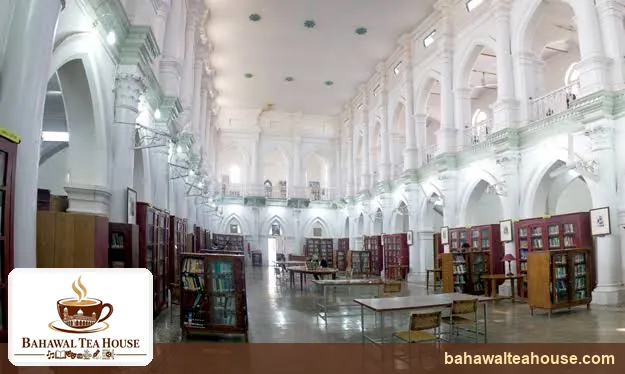
Central Library Bahawalpur was founded in 1924 in a hybrid Neo-Gothic and Victorian style, and it is also known as the Sadiq Reading Library. For art, architecture and history students the building is a living example of the city's Nawabi heritage. Our heritage guide places it within the wider story of Bahawalpur.
Formal Invitations to Schools, Colleges, Universities and Academies
We plan to send formal invitations to educational institutions across Bahawalpur, introducing the programme and inviting them to arrange a visit. The invitation is meant to be a respectful, practical document that tells a principal exactly what a visit would involve.
Institutions can also write to us first. Whether you lead a small academy or a large university department, the approach is the same: a clear request, a sensible date and a named contact person.
What will a formal invitation to an institution include?
We plan for each invitation to outline the purpose of the visit, the suggested structure of the day, the meal options and the contact details for planning. It will invite the principal or head of department to nominate a coordinator who can speak with us directly.
The tone is formal but warm, and a follow-up call or email from our side will be offered so that no invitation is left unanswered.
Can academies and coaching centres arrange a visit?
Yes, academies, tuition centres and coaching institutes are among the groups we aim to welcome. Their students often spend long hours studying, so a change of setting with a quiet reading period and a proper meal can make a refreshing break from the classroom.
Coordinating Visits with the Library Administration
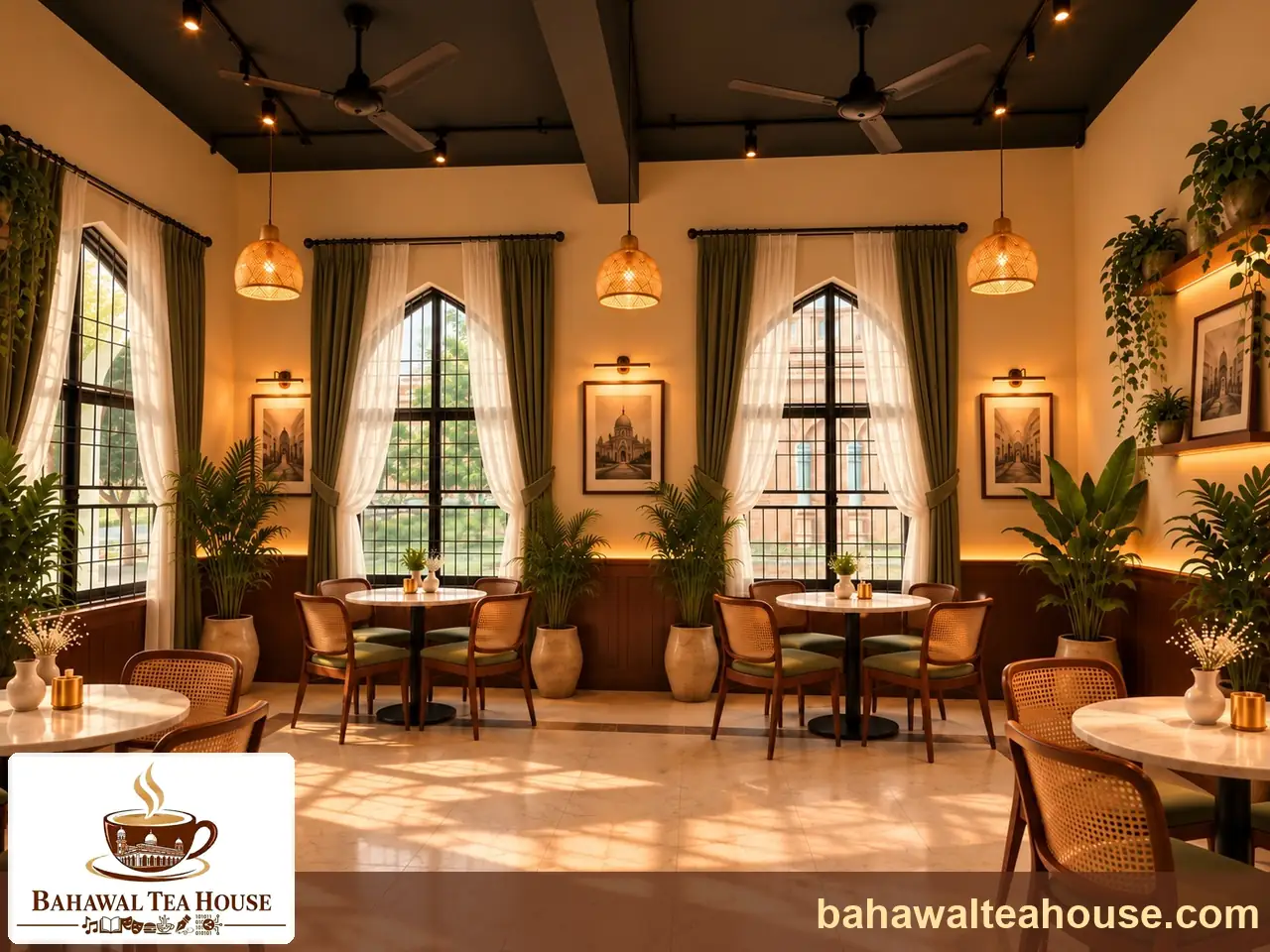
Because the cafe sits inside the Central Library, every group visit is planned in coordination with the library administration. We are an independent business and the library is a public institution, so respecting its rules and routines comes first.
Our role is to handle the hospitality and programme side, while the library's own procedures shape what can be done on any given day.
How will group visits be coordinated and approved?
We plan to share each request with the library administration, agree a suitable date and time, and confirm any limits on group size or movement inside the building. Activities that need extra permission, such as workshops or readings in shared spaces, will go ahead only after approval.
Once a date is settled, the visiting coordinator receives a simple outline of the day so teachers can brief students beforehand.
This approach keeps everyone comfortable: the library retains oversight of its building, and visiting teachers know exactly what has been agreed before they set out.
Welcome and Orientation for Every Group
A good visit begins with a proper welcome. We plan to greet each group at the entrance, introduce the cafe team and walk students through what the day holds, so nobody feels lost or rushed.
The orientation programme is short, friendly and age appropriate, with the aim of making young visitors comfortable in a library, many of them for the first time.
What happens during the orientation programme?
The planned orientation covers a brief welcome, an explanation of how the library and cafe work together, a reminder of group etiquette and an outline of the activities ahead. For younger children the talk is kept short and playful; for university groups it can focus on research habits and using the reading spaces well.
Teachers are encouraged to add a few learning goals of their own, which we will try to fit into the schedule.
How long should a group allow for a visit?
Most groups will find that a half day suits them: time for arrival and orientation, a reading or activity session, and a relaxed meal. Larger or more ambitious programmes, such as a combined library and heritage circuit, can stretch to a full day. We open daily from 6:00 AM to 11:00 PM, so morning and afternoon slots are both possible.
A clear timetable agreed in advance also helps the driver, the staff and the parents who are waiting for children to return.
Student Meal Packages and the Library Study Deal
A learning day works better when students are well fed. We plan to offer affordable student meal packages designed for groups, so a coordinator can agree the meal in advance instead of ordering item by item on the day.
Our menu features doodh patti chai, kadak chai, paratha, eggs and omelette, desi nashta (ناشتہ), snacks, burgers, club sandwiches and fresh juices, and the packages will draw on these familiar favourites.
What is the Library Study Deal?
The Library Study Deal is a combination of a club sandwich or a patty burger with fries and a hot tea or a cold drink. It is meant for students and readers who want a filling, uncomplicated meal while they study, and it also works well as a ready-made option for a group. Prices are kept very affordable, and details are shared when you contact us.
Pairing the deal with a quiet corner makes it a practical choice for exam season, when students want to read for a few hours without leaving the building. Chai, kadak chai or green tea with dates and lemon can be chosen as the hot drink.
What can a student meal package look like?
A package might pair a morning nashta with chai for an early school visit, or a sandwich-and-drink combination for a lunchtime group. Coordinators can mention dietary needs in advance, and our food is prepared to follow applicable food-safety and government regulations. See the full cafe menu to choose items.
Reading Circles, Quizzes and Storytelling
Alongside the meal, we plan to bring a small programme of learning activities to student groups. These are designed to be light, participatory and rooted in books, so that children and teenagers leave with a story or an idea rather than only a snack.
All activities depend on approval and on the space available at the time of the visit.
How will reading circles work for school groups?
In a reading circle, a small group sits together, each member reads or shares a short passage and the group talks about it. For school classes we aim to run circles around a teacher-chosen text, a children's story or a poem, in Urdu, Seraiki or English. The goal is confidence in speaking and listening, not performance.
Teachers who wish to build a short reading list for their class can also ask the library staff for guidance on suitable titles, within the library's own rules.
What are quiz competitions and storytelling sessions for students?
Quiz competitions for students are planned as friendly team contests on general knowledge, literature and local history. Storytelling sessions (کہانی) are aimed at younger children, using folk tales and short stories told aloud with plenty of questions. Both formats suit mixed ages and need little equipment.
These activities give quieter students a chance to shine, and give teachers a lively way to see what the class has understood.
Workshops and Literary Activities for Young Learners
Beyond circles and quizzes, we plan to host workshops that let students make something of their own. The aim is to link the library visit with creative skills that schools often struggle to fit into a busy timetable.
Teachers can request a theme that matches their syllabus, and we will try to shape the session around it.
Which workshops are planned for students?
Proposed workshops include creative writing, poetry reading, handwriting and calligraphy appreciation, and book-making for younger children. Older students may be offered short sessions on note-taking and referencing for research projects. Each workshop will be led by a suitable facilitator and run subject to approval.
Children might leave with a short poem or a first paragraph of their own, which many schools like to display on a classroom wall or share at assembly.
Will students be able to take part in mushairas and literary evenings?
We plan to include student voices in our wider cultural calendar. Young poets may be invited to read a few lines at a mushaira (مشاعرہ), and student talent evenings are a proposed feature. Details sit on the events page, where the full plan for literary and cultural gatherings is described.
Pairing the Visit with the Bahawalpur Museum and Heritage Landmarks
Bahawalpur has a rich Nawabi heritage, and a library trip can be the first stop on a wider learning route. We hope to coordinate with the nearby Bahawalpur Museum so that groups can combine reading and heritage in one outing.
Any such pairing is subject to approval from the relevant institutions and will be arranged in advance by the visit coordinator.
Can a tour include the Bahawalpur Museum?
That is our hope. The Bahawalpur Museum is a heritage and education landmark nearby, and we plan to explore a shared itinerary in which students visit the museum and then return to the cafe for a meal. Whether and when this happens depends on approvals and on the museum's own arrangements.
For a group, the museum stop would be planned as a single morning or afternoon block, with the library visit and meal fitted around it.
Which other landmarks could form a heritage circuit?
Bahawalpur also has Noor Mahal, begun in 1872 and completed around 1875 in an Italian chateau-like neoclassical style, along with Gulzar Mahal and Sadiq Public School, all part of the city's story. Derawar Fort, a square fort with 40 bastions in the Cholistan desert, may suit longer trips. Learn more in our heritage section.
A heritage circuit works best when it is short and focused. Teachers can choose one or two landmarks that match the lesson, and students can complete a small worksheet as they go.
Planned 10% Community Discount for Teachers and Students
Supporting education means making the cafe reachable for people who work and study in Bahawalpur. We plan to introduce a 10% community discount for teachers, government employees, students, authors, librarians and researchers.
The discount is subject to approval and feasibility, and the exact arrangements will be announced once they are confirmed.
How will the student and teacher discount work?
The proposal is that teachers and students show a valid ID at the counter to receive 10% off. For group visits, the coordinator can mention the discount when planning so the meal package and the individual discount can be arranged sensibly. We will share the final conditions on our menu and contact channels once they are settled.
The same 10% community discount is planned for authors, librarians, researchers and government employees, so families and staff may benefit together on later visits.
How Principals and Coordinators Can Arrange a Tour
Arranging a tour should not be a burden for a busy principal or head of department. We have kept the process simple, with one point of contact and a short list of details to share.
You can write to [email protected] or call +92 300 4136123. The contact page has the same details in one place.
What details do we need to plan a visit?
Please share the following information so that we can begin coordinating with the library administration:
A simple email is enough to begin. If you prefer to talk, call us during the day and we will note the details and follow up with a written outline of the plan.
- Name of your school, college, university or academy
- Estimated number of students and accompanying staff
- A contact phone number for the day
- Your preferred date and arrival time
- Any special requirements, such as dietary needs or accessibility
How far ahead should an institution get in touch?
We suggest writing as early as you can, ideally a few weeks before your preferred date, because coordination with the library takes time. Early notice also helps us plan the meal and activities, and gives you room to prepare students and send permission slips to parents.

Planning Checklist for Group Visits
A short checklist helps a coordinator keep every detail in hand. Use it as a working guide when you prepare the visit and share it with colleagues who will accompany the group.
Good planning is the surest way to make sure students spend their time learning and not waiting.
- Confirm date and time with the cafe and library
- Share group size and staff numbers
- Choose the meal package or the Library Study Deal
- Select activities: reading circle, quiz, storytelling or workshop
- Arrange transport and parking, subject to availability and rules
- Collect parental consent and emergency contacts
- Brief students on library etiquette
What should a teacher prepare before a group visit?
Begin by confirming the date, the numbers and the meal arrangement with us. Brief the students on behaviour in a library, obtain parental consent where needed and decide which activity or topic you wish to focus on. On the day, bring a register, an emergency contact list and a clear plan for arrival and departure.
After the visit, a short debrief in class, asking students what surprised them and which book they would like to borrow, helps turn the trip into lasting learning. Thank the staff and share feedback so that future groups benefit.
Benefits for Children, Teens and Researchers
A well planned outreach programme serves different age groups in different ways. The points below describe what we hope each group will take away from a visit.
Because the cafe sits in a library, the benefits go beyond one day: they build habits that last.
How do children benefit from a library visit?
Younger children gain a first positive memory of books: a story told aloud, a comfortable seat and a friendly welcome. Early exposure to a reading space encourages curiosity and vocabulary, and the family-friendly cafe makes it easy for parents to join. Storytelling and children's swings, if approved, add to the enjoyment.
For parents, the visit offers the reassurance of a supervised, family-friendly setting, and for researchers it opens a quiet table in Bahawalpur with tea close at hand.
What do teenagers, university students and researchers gain?
Teenagers can try quizzes, writing and debate, and begin to see the library as a place to study with friends. University students and researchers benefit from a calm environment, quiet reading corners, free Wi-Fi and charging stations, all planned and subject to approval. A regular kitab (کتاب) habit supports exam preparation and research writing.
Teachers also gain: a day out at the library often sparks conversations that carry back into the classroom for weeks.
Library Etiquette for Group Visits
Shared reading spaces work because everyone respects them. A short briefing before the visit helps students understand what is expected, and makes the experience pleasant for other library users.
These guidelines reflect common courtesy; the library's own rules always take priority.
- Speak softly and keep movement orderly
- Handle books and furniture with care
- Keep phones on silent
- Eat and drink only in the cafe area
- Follow directions from library and cafe staff
- Leave spaces clean for the next group
What etiquette should visiting groups follow?
Students should keep their voices low, walk calmly and handle books with clean hands and care. Mobile phones are best kept silent, and food and drink belong in the cafe area. Teachers should keep groups together, follow staff directions and leave seating tidy. Respect for other readers is the heart of library behaviour.
Younger children may need a gentle reminder at the door, so a one-minute rehearsal on the bus can work wonders. Older students can be asked to act as group leaders and set a good example for others.
Common Questions from Teachers and Parents
Questions naturally arise when planning a trip for children, and we would rather answer them clearly than leave anything to chance. The answers below reflect our current plans.
If your question is not covered, please reach out through the contact page and we will be glad to help.
Is there a fee to arrange a school trip to the library?
We plan to keep the arrangement simple, with no complicated paperwork on our side; the main cost to a group is the meal package, which we keep very affordable. Library entry follows the library's own policy.
The cafe is open daily from 6:00 AM to 11:00 PM, and you can find us on the location page or return to the home page to read more about the cafe.
If you plan to bring a large group, please tell us in advance so that seating, quiet corners and activity space can be arranged sensibly and approved where needed. The menu page shows the dishes from which meal packages are built.